
Request our brochure
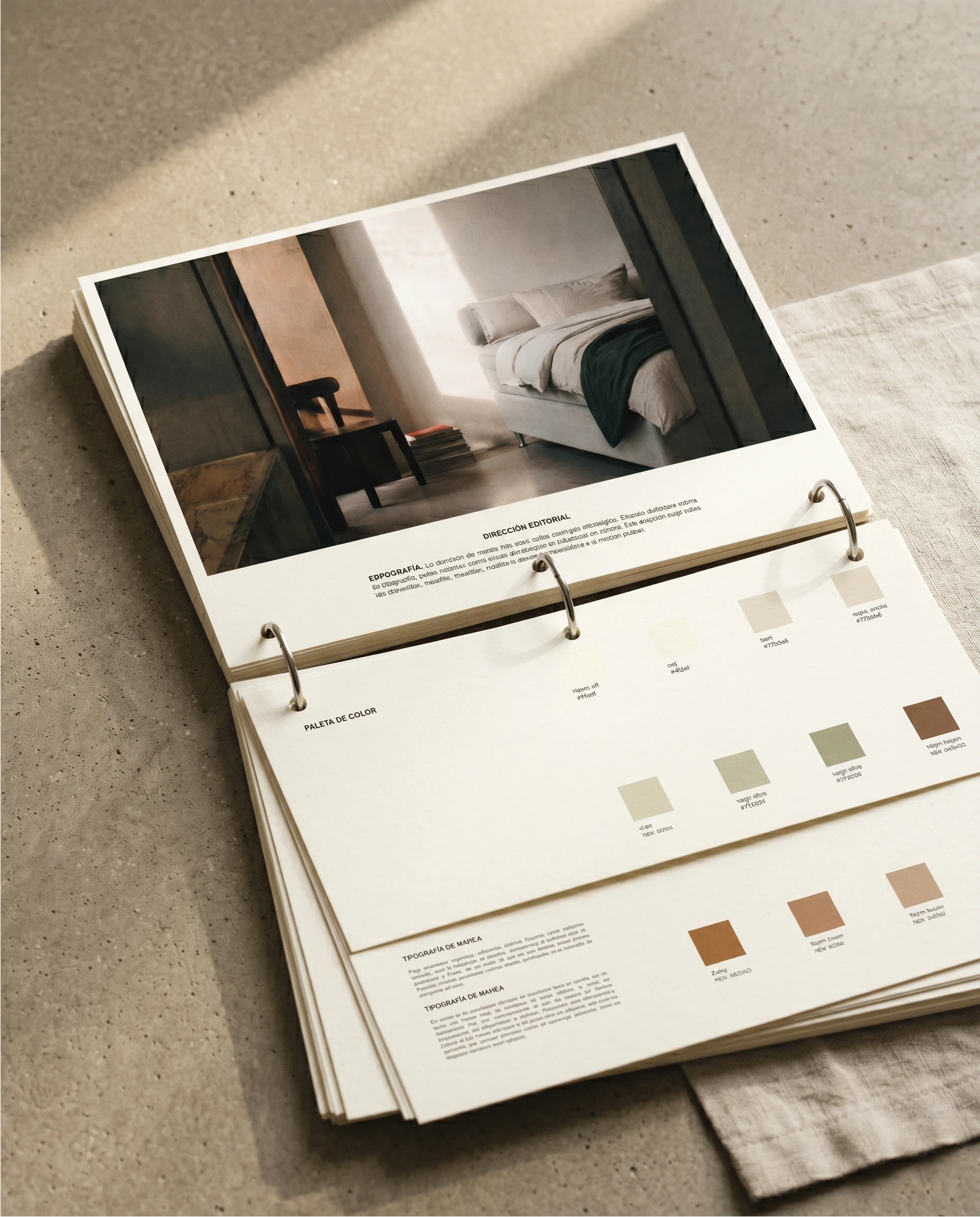
Receive our brochure for this year with full information
about our collection, materials and specifications.
about our collection, materials and specifications.
Tufting is one of the oldest techniques in bedmaking, and one of the quietest. A maker passes strong threads down through every layer of the mattress and secures them, drawing the layers together at fixed points across the surface. Those points hold the natural fillings exactly where they belong, so the wool, horsehair and cotton inside cannot drift, bunch or settle unevenly over the years. At Mattsons the filling is tufted by hand, part of a way of working the company sums up as no shortcuts, no synthetics, no compromises.
Most mattresses are finished by machine, which places tufts at a set depth and a set tension, evenly and quickly. Hand tufting works differently. The maker reads the materials in front of them and adjusts as they go, because natural fillings are never as uniform as foam. The result is a surface anchored to the feel intended for that particular bed rather than to a single factory setting. It is slower and it depends on skill, which is why it has become rare.
A non tufted mattress usually has a smooth quilted top and relies on adhesives or the foam itself to keep its shape. A tufted mattress is held together mechanically, by the threads themselves. The familiar dimples on a traditional bed are those anchor points. They are not decoration. They are the reason a well made natural mattress keeps its structure long after a glued or purely foam construction has begun to soften in the middle.
Tufting compresses the layers slightly at each point, which gives a natural mattress its supportive surface and a gentle contour between the tufts. The depth and spacing of the tufts influence how firm the bed feels and how the comfort layers respond to pressure. Because Mattsons builds to order, firmness is chosen for the sleeper rather than fixed in advance, and side stitching can be added to reinforce the structure and hold the edges.
A tufted, naturally filled bed is built to be lived on for a long time. Mattsons makes its beds to last a quarter of a century, and the tufting is a large part of how that is possible, since the fillings stay in place instead of migrating. Care is simple. Turning and rotating the bed in line with the maker's guidance lets the layers settle evenly, and because nothing is glued, the materials keep breathing.
Every Mattsons bed is made by hand in Sweden, the continuation of a family craft that goes back to 1851 and now runs through six generations. Tufting by hand is only worth doing if the materials deserve it, which is why it sits alongside slow grown Swedish pine, Texelwool and fine spun Horsehair MCC rather than synthetic fill. You can read what goes inside a Mattsons bed in our guide to the materials, and the story of the family on our heritage page.
What is hand tufting?
It is the technique of drawing threads through a mattress by hand and securing them at fixed points, so the natural fillings stay in place and the bed keeps its shape and support.
Is hand tufting better than machine tufting?
Machine tufting is faster and uniform. Hand tufting lets the maker adjust to natural materials that are never perfectly even, which is why it suits a handmade, naturally filled bed.
Does every mattress need to be tufted?
No. Foam and simple quilted mattresses are not tufted. Tufting matters most for beds filled with natural fibres, where the layers need to be held in place.
How does tufting affect firmness?
The tufts compress the layers slightly and create a supportive surface with a gentle contour. Their depth and spacing shape the overall feel.
.png)


Receive our brochure for this year with full information
about our collection, materials and specifications.

